
Hot weather and your water supply
Hot weather is becoming more common, so here’s how we're preparing for it.
The impact of hot weather
Hot spells and heatwaves are becoming more frequent and more intense as our climate changes. This means we're seeing longer periods of dry weather, higher temperatures and more occasions when demand for water rises sharply.
Our teams work all year-round to provide reliable, high-quality drinking water. However, when temperatures soar, people naturally use more water. Gardens get watered, paddling pools get filled, and many of us take extra showers to cool down.
On the hottest days, demand can increase significantly in a short space of time, which can make it challenging to pump it through the pipes into homes quickly enough.
Here you'll find more information about how we prepare for hot weather, what you can expect from us during prolonged heatwaves, and how you can use water wisely to protect supplies for everyone.
What is a heatwave?
A heatwave is a period of hot weather that lasts for at least three consecutive days. The threshold varies by UK county – for our region, this temperature is 26 degrees Celsius.
Heatwaves can put extra pressure on water supplies because demand increases rapidly across the region at the same time.
During these periods, we all must use water wisely so that the water network can continue operating efficiently and we can keep water flowing for everyone.
How you can help
Small switches can have a big impact. During periods of hot weather, we're asking customers to focus on a few simple actions that can help reduce demand while still enjoying the summer.
You could try:
- letting your lawn go brown – it will recover when the rain comes
-
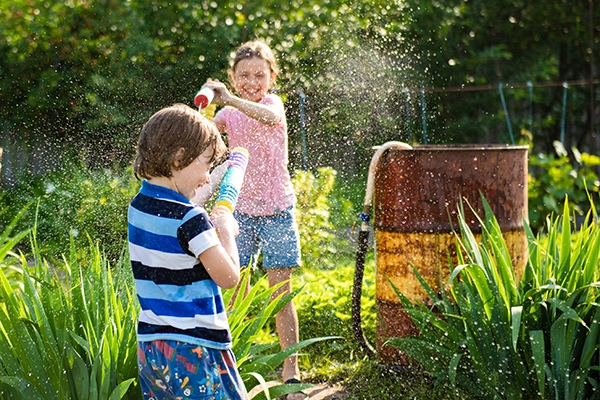
swapping sprinklers and slip-and-slides for water pistols, wet sponges or buckets
-
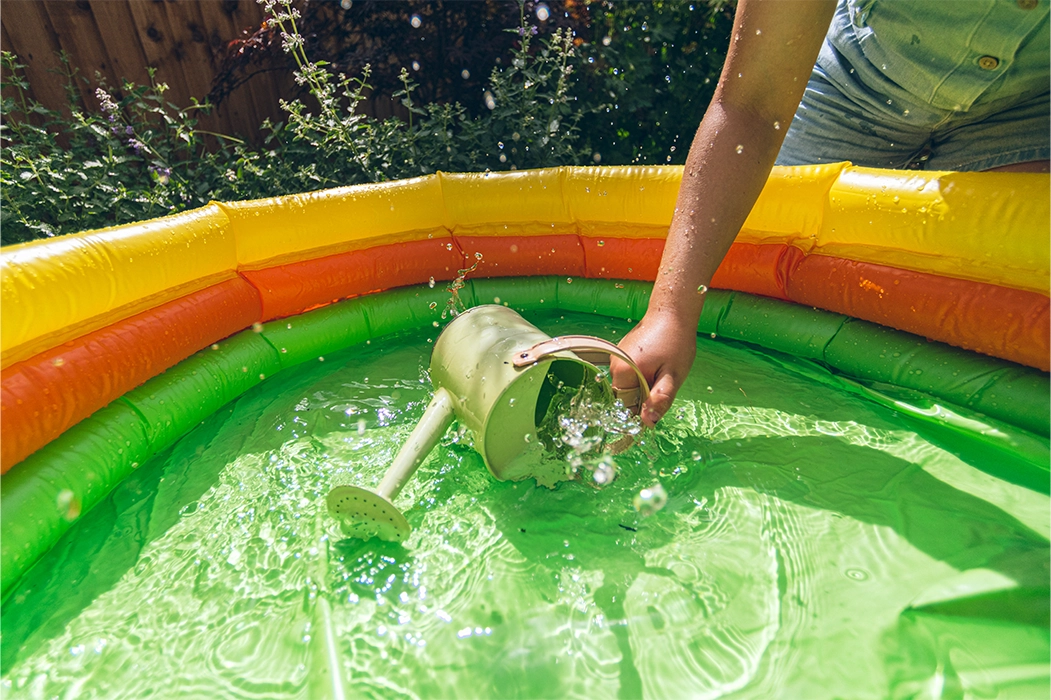
using a watering can
-
reusing paddling pool water
-
covering paddling pools and hot tubs when not in use to prevent evaporation
-
keeping showers short and cool.
Heatwave toolkit
Use this toolkit to share advice and help others during a heatwave.
Why wetter winters don't guarantee drought-free summers
A common myth is that a wet winter means there's no risk of water shortages in summer. Unfortunately, it's not that simple.
Water stored in reservoirs, rivers, underground aquifers (layers of rock, sand, gravel, or other permeable materials that store groundwater) and the wider environment can quickly come under pressure during long periods of hot, dry weather.
Higher temperatures increase evaporation, while dry ground and growing plants can reduce how much water remains available.
As climate patterns change, we're increasingly seeing periods of very wet weather followed by prolonged dry spells. That's why careful water management and efficient water use remain important throughout the year.